
Most accessibility audits still stop at color contrast and alt text. Meanwhile, the legal landscape around cognitive accessibility has shifted dramatically, and organizations that ignore it face real regulatory and litigation risk. This article maps every major legislative framework that now touches cognitive accessibility, breaks down what each one actually requires, and gives you a concrete compliance path so you can close the gap before enforcement catches up.

- The ADA (with its 2024 web accessibility rule), Section 508, the European Accessibility Act (EAA), and EN 301 549 all contain provisions that directly or indirectly cover cognitive accessibility.
- WCAG 2.1 and the emerging WCAG 2.2 success criteria add specific cognitive requirements around consistent navigation, error prevention, and input assistance.
- Organizations that treat cognitive accessibility as optional are exposed to lawsuits, regulatory fines, and exclusion of a significant user base.
Accessibility law used to be about ramps and screen readers. That era is over. In 2023, regulators on both sides of the Atlantic started treating cognitive barriers with the same seriousness they give to visual and motor impairments. The ADA's updated web rule, the European Accessibility Act's approaching enforcement deadline, and refreshed WCAG criteria all converge on one message: if your digital product confuses people with dyslexia, ADHD, anxiety, or low digital literacy, you have a compliance problem.
The practical challenge is that cognitive requirements are scattered across multiple frameworks, written in dense legal language, and rarely consolidated in one place. This article does that consolidation for you.
Major Legislative Frameworks

Five frameworks matter most for cognitive accessibility compliance in 2023. Each operates at a different scope, but they overlap significantly.
- Americans with Disabilities Act (ADA) - Title II (state/local government) and Title III (public accommodations). The Department of Justice finalized a rule in 2024 explicitly tying web and mobile app accessibility to WCAG 2.1 Level AA. This rule covers cognitive criteria.
- Section 508 of the Rehabilitation Act - Applies to U.S. federal agencies and their contractors. References WCAG 2.0 Level AA, with ongoing alignment toward 2.1.
- European Accessibility Act (EAA) - Directive (EU) 2019/882, with a June 28, 2025 enforcement deadline. Covers e-commerce, banking, transport, and telecommunications. Explicitly references cognitive accessibility in its functional performance statements.
- EN 301 549 - The European harmonized standard for ICT accessibility. Maps directly to WCAG success criteria and adds cognitive-specific clauses for understandability and operability.
- WCAG 2.1 / 2.2 - Not legislation itself, but the technical standard that every framework above references. WCAG 2.2 (finalized October 2023) added success criteria like Consistent Help (3.2.6) and Redundant Entry (3.3.7) that target cognitive load directly.
Cognitive Requirements in Detail

Saying "comply with WCAG" is easy. Knowing which success criteria actually address cognitive accessibility is harder. Here is the breakdown.
WCAG Success Criteria With Cognitive Impact
- 1.3.5 Identify Input Purpose (Level AA) - Input fields must programmatically indicate their purpose, enabling autofill and reducing memory load.
- 2.2.1 Timing Adjustable (Level A) - Users can extend, turn off, or adjust time limits. Critical for people who process information slowly.
- 2.4.6 Headings and Labels (Level AA) - Headings and labels describe topic or purpose. Reduces cognitive effort to scan and orient.
- 3.1.1 Language of Page (Level A) - The default language is programmatically determined. Assistive tools for cognitive disabilities rely on this.
- 3.2.3 Consistent Navigation (Level AA) - Navigation mechanisms appear in the same relative order across pages. Predictability reduces cognitive load.
- 3.2.6 Consistent Help (Level A, WCAG 2.2) - Help mechanisms appear in the same location across pages.
- 3.3.2 Labels or Instructions (Level A) - Labels or instructions are provided when content requires user input.
- 3.3.7 Redundant Entry (Level A, WCAG 2.2) - Information previously entered by the user is auto-populated or available for selection. Eliminates unnecessary memory demands.
EAA Functional Performance Statements
The EAA goes beyond WCAG by including functional performance statements that explicitly mention cognition. Annex I requires that products and services be usable by persons with limitations of cognition, learning, and understanding. This means compliance is not just about checking WCAG boxes. You need to demonstrate that the overall user experience is comprehensible.
The following interactive element summarizes how the major frameworks map to cognitive accessibility domains:
ADA (Title II & III)
Web rule references WCAG 2.1 AA. Covers cognitive criteria for navigation, timing, error prevention.
U.S. FederalEuropean Accessibility Act
Functional performance statements explicitly require cognition, learning, and understanding support.
EU DirectiveSection 508
Federal procurement standard. Aligns with WCAG 2.0 AA, moving toward 2.1. Cognitive criteria inherited.
U.S. Federal AgenciesWCAG 2.1 / 2.2
Technical standard. 2.2 adds Consistent Help and Redundant Entry targeting cognitive load directly.
Global StandardHow Effective Are Current Regulations?
The honest answer: partially effective. Current regulations have raised awareness and created legal accountability, but they still lean heavily on visual and motor accessibility. Cognitive accessibility is often treated as an afterthought.
Three specific gaps stand out:
- Vague cognitive language - The EAA mentions "cognition" in its functional performance statements but does not prescribe specific testing methods. Organizations are left guessing what "usable by persons with limitations of cognition" means in practice.
- Enforcement lag - The ADA web rule was years in the making. The Department of Justice acknowledged this delay directly:
"The Department extended the rule's compliance dates by one year.">, Fact Sheet: New Rule on the Accessibility of Web Content and Mobile Apps Provide
- No cognitive-specific testing standard - WCAG provides success criteria, but there is no widely adopted testing protocol equivalent to automated contrast checkers for cognitive barriers. Tools like PagePerson Insights fill this gap by analyzing cognitive load and comprehension barriers, but the regulatory ecosystem has not yet standardized cognitive testing.
Implications for Organizations

Compliance is not optional, and the consequences of ignoring cognitive accessibility are escalating.
Legal Risk
ADA-related digital accessibility lawsuits exceeded 4,000 in 2023 in the United States alone. A growing share of these cite usability and comprehension issues, not just screen reader compatibility. In the EU, the EAA's June 2025 enforcement deadline means member states will begin issuing penalties for non-compliant digital products and services.
Operational Challenges
- Audit scope expansion - Traditional accessibility audits check around 50 WCAG criteria. Adding cognitive review increases scope by roughly 30%, requiring new expertise or tooling.
- Cross-team coordination - Cognitive accessibility touches content, design, and development. A compliance lead cannot fix it alone.
- Documentation burden - Regulators increasingly expect documented evidence of accessibility efforts. A VPAT or accessibility statement that ignores cognitive criteria is incomplete.
The Compliance Process
The following diagram outlines the key steps from identifying applicable regulations to maintaining ongoing compliance:
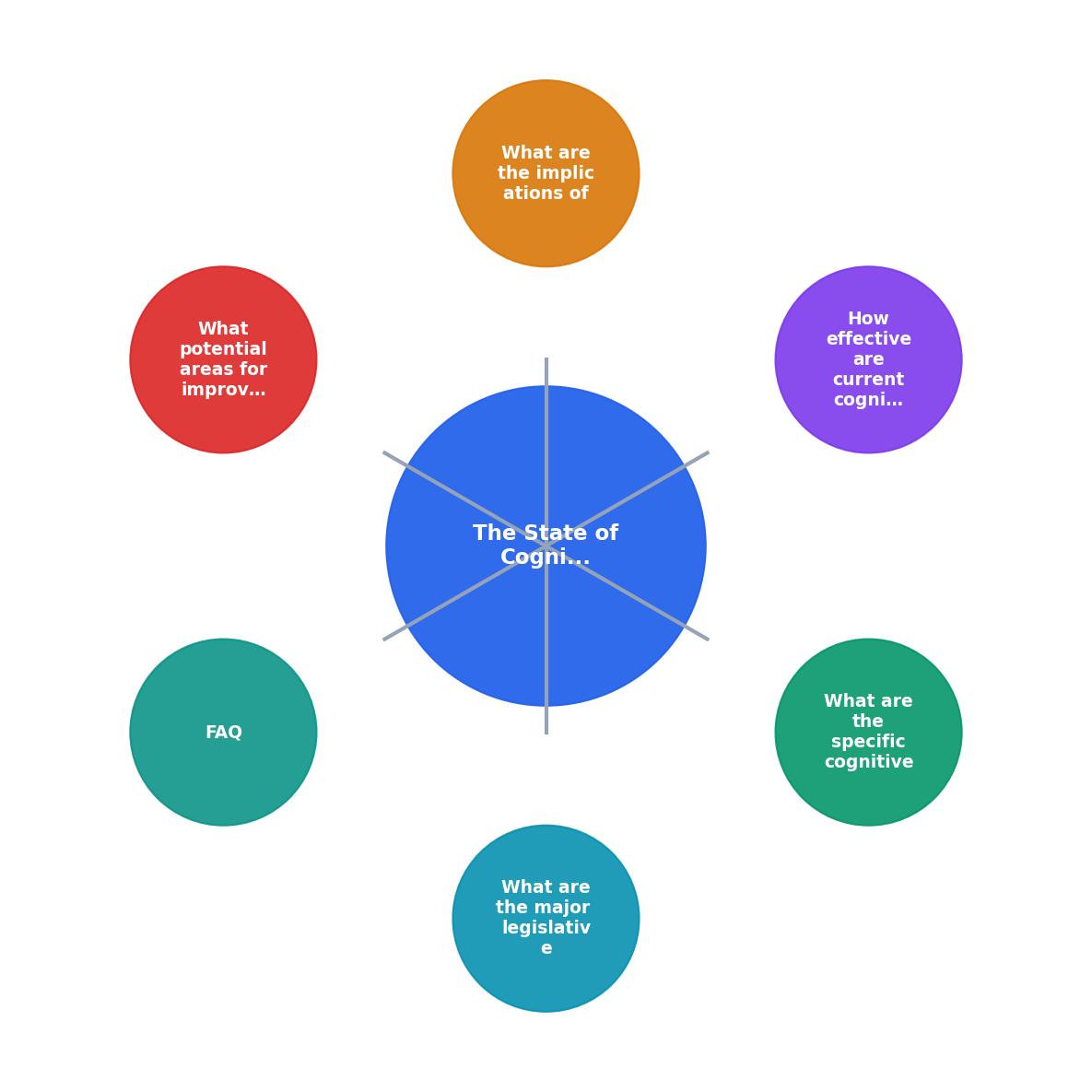
The process follows these stages: Identify applicable laws, Map cognitive WCAG criteria, Audit current state, Remediate barriers, Document compliance, and Monitor continuously. Each stage feeds into the next, and monitoring loops back to auditing as content and regulations change.
Future of Cognitive Accessibility Law
Several developments signal where legislation is heading:
- WCAG 3.0 (Silver) - Still in draft, but its scoring model will weight cognitive accessibility more heavily than the current pass/fail approach. Expect a shift from binary compliance to graded conformance.
- EAA enforcement precedents - The first wave of EAA enforcement actions (expected 2025-2026) will set precedents for how strictly cognitive requirements are interpreted.
- Sector-specific rules - Healthcare (HIPAA intersection), finance (PSD2 accessibility), and education (Section 504) are developing sector-specific cognitive accessibility guidance.
- AI-generated content - As organizations deploy AI chatbots and generated content, regulators are beginning to ask whether AI outputs meet cognitive accessibility standards. This is uncharted territory with no clear rules yet.
Cognitive Accessibility Compliance Guide
Your progress is saved automatically in your browser.
| Traditional A11y Audit | Cognitive-Inclusive Audit |
|---|---|
| Contrast ratios, alt text, ARIA | + Navigation consistency, error prevention, readability |
| Automated scanner covers 80%+ | Automated scanner covers ~50%; manual review needed |
| Single-discipline (dev) | Cross-team (content, design, dev) |
| VPAT covers visual/motor | VPAT includes cognitive criteria |
| Pass/fail per criterion | Graded comprehension assessment |
FAQ
Frequently Asked Questions
What cognitive accessibility requirement has been the hardest for your organization to implement? Share your experience in the comments.
Additional Resources
- Fact Sheet: New Rule on the Accessibility of Web Content ... - The final rule has specific requirements about how to ensure that web content and mobile applications (apps) are accessible to people with disabilities.
- New Americans with Disabilities Act Title II Accessibility ... - In April 2024, the U.S. Department of Justice issued a final rule updating its regulations for Title II of the Americans with Disabilities ...
- State-level Accessibility Law and Policy - The policy shows the state's dedication to making information technology accessible to both the public and state employees, including those with disabilities, ...